Harmattan dust can silently cut solar output by 25% or more. These seven practical maintenance habits keep your system producing at full strength all year round in Nigeria.
Nigeria's climate is generous to solar — abundant sun most of the year — but it also throws two challenges at your panels: harmattan dust from November to March, and torrential rain from April to October. Here's how to keep your system at peak output through both.
1. Wash Panels Monthly During Harmattan
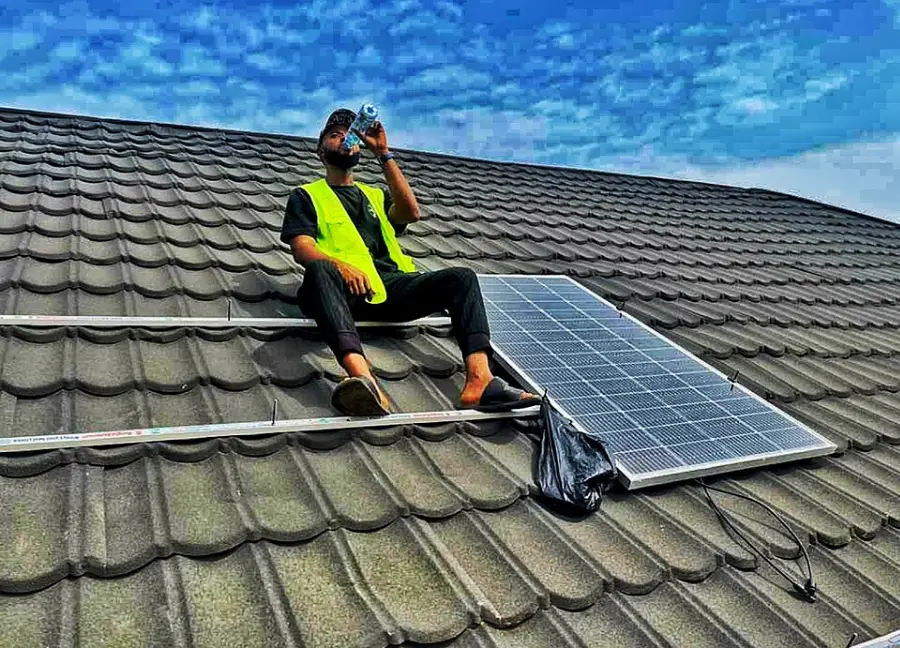
A fine layer of harmattan dust can reduce panel output by 15–25%; a thick layer after weeks of neglect can cost you 40%. Rinse panels with clean water and a soft brush or squeegee — early morning, when panels are cool. Never use abrasive sponges or detergents, which damage the anti-reflective coating.
2. Check Your Production Numbers Weekly
Your inverter display (or its phone app) shows daily generation. Learn your system's normal range — if a 3kW array that usually makes 14kWh suddenly makes 9kWh on a sunny day, something needs attention: soiling, a tripped string, or a failing connection.
3. Trim Vegetation Before It Shades
Trees grow fast in the rainy season. Even a small shadow across one panel can drag down an entire string's output. Walk your roofline every couple of months and trim early.
4. Inspect Cables and Conduits After Storms
High winds and driving rain test every cable tie and conduit joint. After major storms, visually check that conduits are intact, glands are sealed and no cables are hanging. Water ingress into DC connectors is a leading cause of faults — and it's completely preventable.
5. Keep Batteries Cool and Ventilated
Heat is the enemy of every battery chemistry. Your battery room or cabinet should stay under 30°C where possible — shaded, ventilated, never in direct sun or next to a generator exhaust. Lithium batteries tolerate heat better than tubular, but both live longer when cool.
6. Tighten Terminals Annually
Thermal cycling gradually loosens electrical terminations. A loose terminal creates resistance, heat, and eventually a burnt lug or worse. An annual professional inspection includes torque-checking every connection — cheap insurance against the most common cause of system fires.
7. Don't Ignore Small Warnings
Error codes, occasional trips, a faint burning smell, flickering under load — these are early symptoms, and early fixes are cheap. Our maintenance customers' systems last visibly longer than run-to-failure systems.
Prefer to Never Think About Any of This?
IsiPower Hub runs affordable annual maintenance plans across Abuja: scheduled cleaning, full electrical inspection, firmware updates and priority call-out. Ask about a maintenance plan for your system — even if we didn't install it.
Ready to Put This Into Practice?
Get a free energy audit and an itemised quote for your home or business — no obligation.